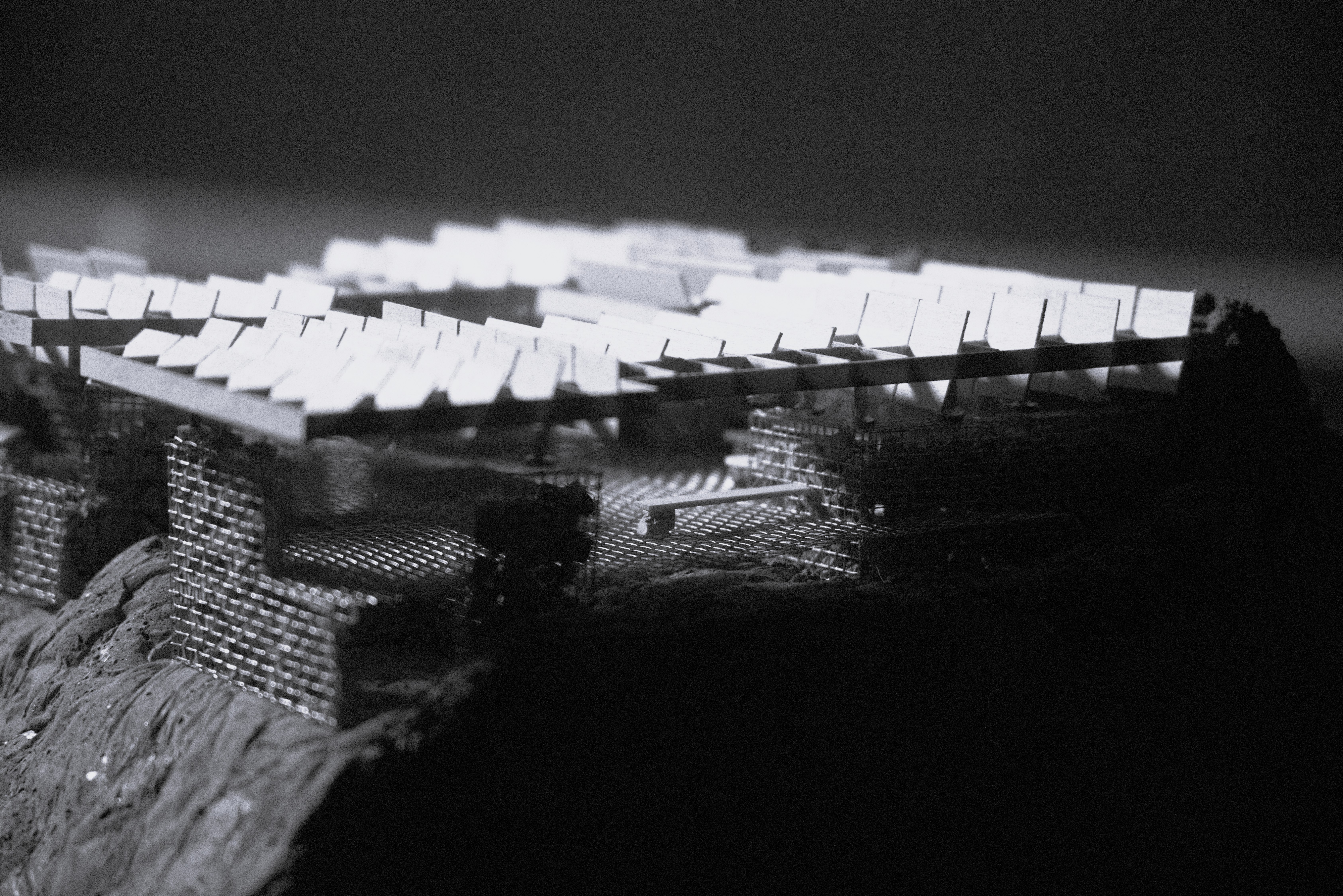
Curanto Cookhouse
The cookhouse is a celebration of tradition, embodying curanto's cooking process, which innately acts in conversation with the site. The feast draws its essence from the earth, using an excavated pit, intricately layered to pressure cook meats, seafoods, and vegetables. Though the ceremony traditionally requires no structural intervention, urbanization has distanced communities from the land, allowing the practice to fade from daily life.
Gabion walls embody the materiality of both curanto and the site, allowing nature to permeate and reclaim the cookhouse over time. Wooden roof panels articulate to bring in sunlight or protect from rain, depending on the needs of each space. Together, these elements create a community-driven structure that supports a disappearing tradition while preserving its conversation with earth, weather, and collective labor. The cookhouse emerges as a bridge between past and present, giving place to the ritual without replacing the ground that defines it. Rather than simply enclosing the process, the architecture frames preparation, gathering, cooking, and eating as a shared civic ceremony.
How can architecture support a ceremony that traditionally requires no building?